About Us

Take in the beauty of Ariel Foundation Park

Step into Tranquility
Relax with a sunset over one of the beautiful lakes

Explore
Explore what the park has to offer
History & Vision
Ariel-Foundation Park
Ariel-Foundation Park was developed through adaptive reuse of the former glass-making site (once operated by Pittsburgh Plate Glass Company) — transforming industrial ruins into a vibrant public space. The vision is to honor the area’s industrial heritage while creating a focal point for recreation, community, art, and social gatherings in Knox County.
Whether you’re strolling lakeside paths, wandering through landscaped terraces, exploring historic glass-works ruins, or climbing to a sweeping vantage point, every corner of the park tells a different part of the story — both of the land and the people who shaped it.

Featured Landmarks & Attractions
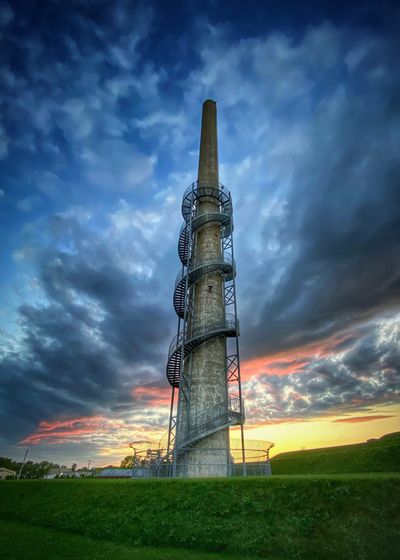
Rastin Observation Tower
- This striking spiral-staircase tower wraps around the park’s landmark 280-foot smokestack, once part of the glass factory, and carries visitors up 224 steps to an observation deck 140 feet high.
- From the top, you get an expansive view over Mount Vernon, the park’s lakes, terraces, and surrounding Knox County, a dramatic link between past industrial roots and present natural beauty.
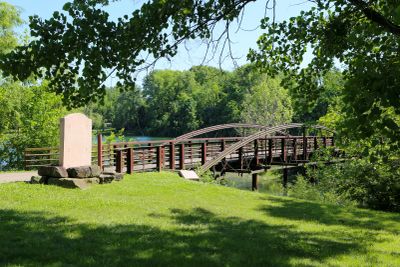
Phoenix Bowstring Truss Bridge
- A significant historic structure, this 1876 wrought-iron bowstring truss bridge, originally from rural Knox County, was relocated to the park and now serves as a pedestrian bridge over one of the park’s lagoons.
- Its arched, 19th-century design is rare among surviving bridges, and walking across it offers a tangible connection to local history amid the park’s serene, lakeside setting.
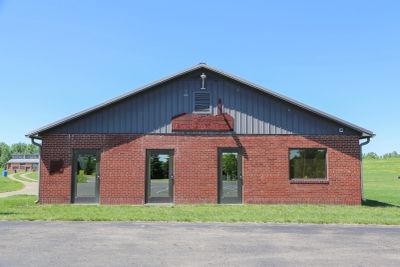
CA&C Depot (William A. Stroud Visitor Center)
The historic CA&C (Columbus, Akron & Cleveland) Railroad Depot, restored and re-dedicated as the William A. Stroud Visitor Center, serves as the park’s welcome hub.
- From here, visitors can access trail maps, learn about the park’s history, and begin exploring the park’s many zones, from lakes to terraces to ruins.
Mavis Island
Mavis Island sits in the central lake of the park, connected by a narrow isthmus, a lovely natural retreat named in honor of former Mount Vernon mayor Richard K. Mavis, who played a key role in the park’s creation.
- It offers peaceful spots for reflection, scenic views across the water, and a sense of escape, all within the accessible layout of the park’s lake system.

Urton Clock House
- The Urton Clock House now functions as a museum and event space, preserving the history of the old PPG glass factory and the people who worked there.
- It is located next to the Rastin Observation Tower, and can host gatherings of up to 72 guests.
Tree of Life Labyrinth (“The Labyrinth”)
- The Labyrinth is a gentle, winding 1,000-foot walkway set among sandstone stairs and small ponds, accessed from The Woods and lying near the event-center portion of the park.
- Designed for quiet contemplation and peaceful strolling, it adds a meditative, reflective quality to the park experience, a contrast to the open water and open skies elsewhere in the park.

The Lakes
The park contains three large lakes, once gravel quarries, now transformed into tranquil waterways that anchor Ariel-Foundation Park’s landscape.
- Around the lakes you’ll find paved pathways, benches, picnic pavilions (including the Park National Bank Pavilion and Patio), restrooms, and fishing/boating access (with restrictions).
- The picturesque lakeside environment, especially in early morning or evening, is ideal for kayaking, peaceful walks, or enjoying sunset reflections on the water.

The Terraces & River of Glass with Curvilinear Reflecting Ponds
The Terraces add dramatic vertical dimension to the park: grassy, sculpted hills with spiral paths leading to elevated viewpoints overlooking the entire park.
- Winding around the terraces are curvilinear reflecting ponds, elegant water features that mirror the sky and terrain.
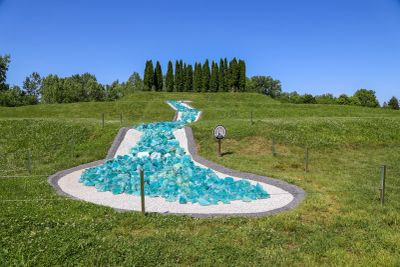
- Flowing down one hillside near the terraces is the River of Glass: a creative homage to the park’s industrial past. The “river” is made of recycled glass cullet, remnants from the former glass factory, and is laid out in striking shades of blue and green to evoke flowing water.
In 2025, the River of Glass underwent a revitalization to renew and enhance this unique installation, ensuring it remains a centerpiece for visitors to enjoy for years to come.
The Ruins
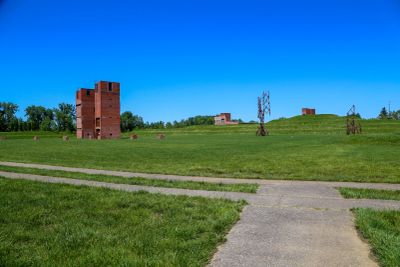
- The Ruins area preserves fragments of the former glass-making factory (PPG), including the smokestack around which the Rastin Observation Tower winds.
- Walking among these ruins, rusting metal, salvageable structural steel, old foundations, gives a powerful sense of the park’s history, honoring the people and industry that once defined the site.
- While the Ruins offer a raw, industrial aesthetic, the rest of the park balances it with green spaces, water, art, and recreational amenities, a meaningful transformation from factory grounds to public greenspace.
Knox County Foundation Pavilion & Patio
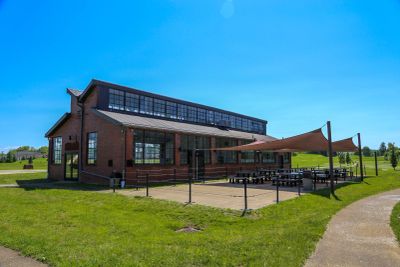
The Pavilion — once a Carpenter Shop for the PPG plant (built in 1945) — has been preserved and converted into a rentable event space.
- With its open structure, large windows, and adjacent covered picnic patios (Barone Patio), it’s ideal for smaller gatherings: family celebrations, small parties, work events, or community meetings (up to about 175 people).
- Its location behind the Urton Clock House embeds it within the more historically oriented portion of the park, blending industrial heritage with communal use.
Schnormeier Event Center
The Schnormeier Event Center is a spacious, 17,000-square-foot venue that can accommodate up to 2,000 guests for concerts, weddings, performances, banquets, and other large events.
- Located near the Rastin Tower and connected to the overall trail and park system, it bridges the gap between the park’s natural/landscape features and its role as a hub for community and cultural gatherings.